
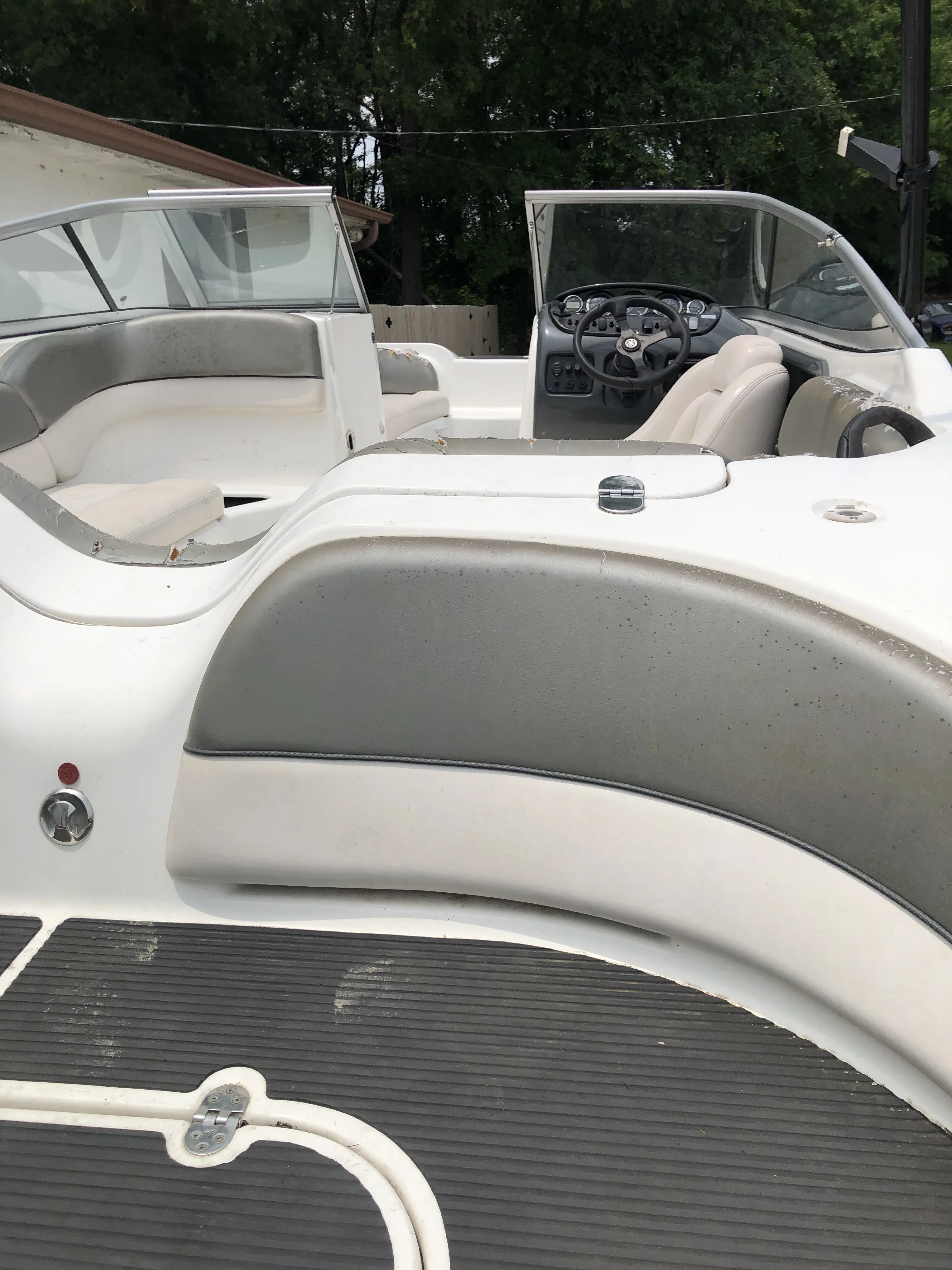
Marine vinyl is built to survive standing water, UV and salt. What it does not survive is aggressive cleaning, and a surprising share of the ruined cushions that come through the shop were damaged by the owner trying to look after them.
Start with the gentlest thing that works
- Warm water and a mild soap, applied with a soft brush or a microfibre cloth
- Work in sections and rinse before anything dries on the surface
- Get into the seams and welts, where dirt and moisture actually collect
- Dry with a towel rather than leaving it to sit wet in the sun
That handles the large majority of ordinary grime. Escalate only if it does not, and escalate one step at a time.
What quietly destroys marine vinyl
| Avoid | Why |
|---|---|
| Bleach, undiluted or repeated | Attacks the stitching thread and can strip the topcoat that gives the vinyl its UV resistance. The cover often outlives the seams — until bleach reverses that. |
| Stiff brushes and abrasive pads | Scratch the topcoat. Once the surface is microscopically rough it holds dirt harder, so cleaning gets more aggressive each time — a loop that ends in replacement. |
| Solvents, acetone, petrol | Dissolve plasticisers. The vinyl looks clean, then goes hard and cracks at the folds a season later. |
| Pressure washers | Drive water straight through the seams into the foam, which is exactly the problem you were trying to avoid. |
If the seat stays damp, the cover is not the problem
A cushion that never really dries usually has standard upholstery foam inside it. That foam behaves like a sponge — it holds water against the cover and against the deck, and no amount of surface cleaning changes that.
Quick-dry reticulated foam has an open cell structure that lets water pass straight through instead of trapping it. If you are having a cushion rebuilt anyway, this is the upgrade worth paying for.
When cleaning is no longer the answer
- The vinyl has gone hard and chalky rather than staying supple
- Seams are opening, or stitching pulls through when you press on it
- Cracks have appeared along the fold lines
- Staining sits under the surface rather than on it
At that point you are looking at recovering rather than cleaning. Bring one cushion by the shop — you do not need to bring the boat — and we will tell you honestly which one it is. More on our marine upholstery page.